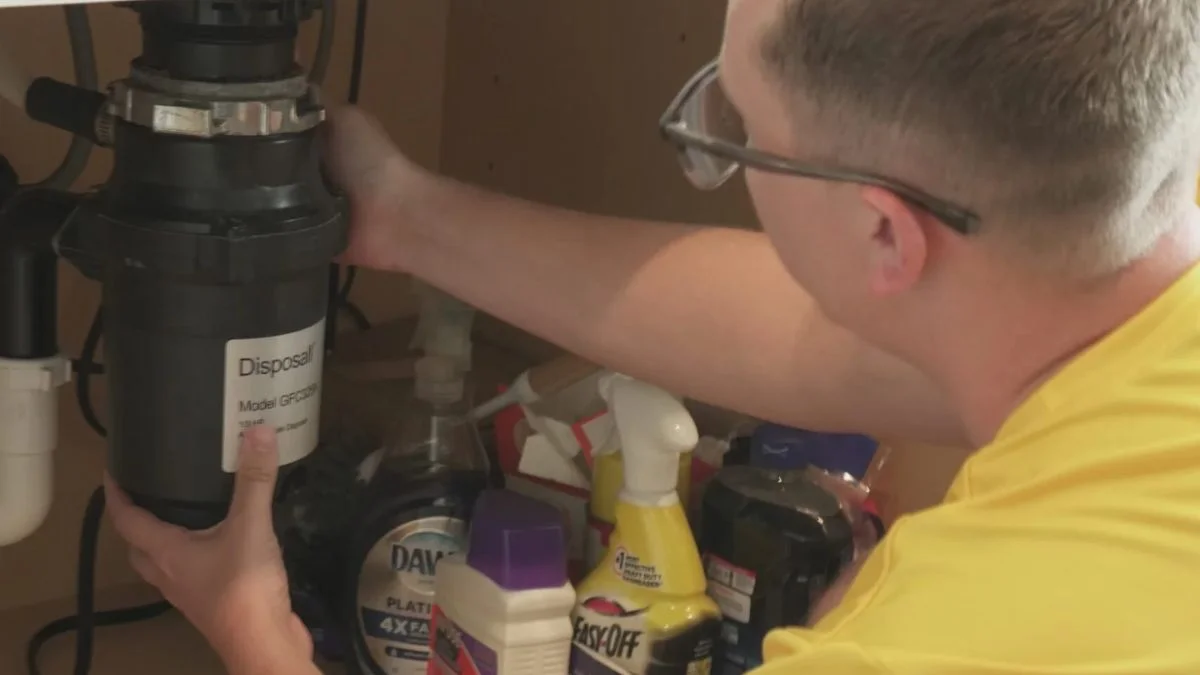
A disposal that stops working almost always comes down to one of six things: lost power, a tripped reset, a jam, a clog further down the drain, a switch or wiring problem, or a motor that’s failed. The right next step depends entirely on what the disposal is actually doing. A silent disposal, a humming disposal, one that runs but the sink won’t drain, and one that’s leaking are four different problems with four different answers, and mixing them up wastes time.
Before Anything Else: A Few Safety Rules That Don’t Bend
Never put your hand inside a garbage disposal. Not to check for objects, not to clear a jam, not even if you’re sure the switch is off. Switches can fail, wiring can be miswired, and a freed impeller can move unexpectedly.
Before any inspection or jam-clearing step, disconnect power. Turn off the wall switch, and if the unit plugs into an accessible outlet under the sink, unplug it. For anything involving the breaker or wiring itself, that’s outside safe homeowner territory unless you’re specifically comfortable with basic electrical work.
Don’t hold the reset button in or press it repeatedly hoping it sticks. Don’t keep flipping a breaker that keeps tripping. Both are the unit telling you something is still wrong.
Quick Diagnosis: What Is Your Disposal Actually Doing?
| What the Disposal Is Doing | Likely Problem | First Safe Step | DIY or Professional? |
|---|---|---|---|
| Completely silent, no hum at all | No power reaching the unit | Check the reset button, the breaker, and whether it’s plugged in | DIY to check; professional if power checks out fine and it’s still dead |
| Humming, but not spinning | Motor has power, something is jamming the impellers | Turn it off immediately; do not keep running it | DIY jam-clearing if comfortable; professional if unresolved |
| Runs normally but sink doesn’t drain | Downstream drain clog, not the disposal itself | Stop running more water into it; check the P-trap area | Often professional (drain cleaning) |
| Reset button keeps tripping repeatedly | Persistent jam, overload, or electrical issue | Stop resetting it after the second attempt | Professional |
| Metallic rattling or grinding noise | Foreign object in the grinding chamber, or motor wear | Turn off and visually inspect with a flashlight, don’t reach in | Often professional |
| Leaking underneath | Depends entirely on location, see leak section below | Shut off power; check where the water is actually coming from | Depends on location |
| Weak grinding, food not breaking down | Worn grind ring or overloaded | Reduce load per batch | DIY at first, professional if it continues |
8 Common Causes of a Garbage Disposal Not Working
1. The Disposal Has Lost Power
If the unit is completely silent, start here before assuming anything mechanical. Check that it’s plugged in if it uses an accessible outlet, check whether that outlet is a GFCI that’s tripped (press its reset button if so), and check the breaker at your panel. Wall switch wiring varies by installation, so don’t assume your setup matches a generic diagram. A silent disposal means: rule out power first.
2. The Overload Protector (Reset Button) Has Tripped
Every household disposal has a small red overload button on the underside, usually near the bottom. It trips to protect the motor when the unit overheats or strains against a jam. With the switch off, press it in firmly. If it holds and the unit runs on the next try, that one trip was likely a one-time overload. If it won’t stay in, or you find yourself resetting it more than once in the same day, resetting is not fixing whatever is actually wrong. That’s the point to stop and look deeper, not to keep pressing the button.
3. The Disposal Is Jammed
This is the cause behind the classic humming but not spinning symptom. A hum means the motor is getting power but something (a utensil, a fruit pit, a piece of bone, dense fibrous food) is physically blocking the impellers from turning. With power disconnected, most disposals have a hex-shaped hole on the underside for the manufacturer-supplied wrench. Inserting it and rotating back and forth can free the impellers manually. Procedures vary by brand and model, so follow the instructions for your specific unit, and stop if you’re not comfortable. Never reach in with your hand or fingers, even to pull out visible debris; use tongs or pliers for that.
4. Something Is Lodged in the Grinding Chamber
Metallic rattling, clanking, or a grinding sound that’s louder or different than normal usually points to a foreign object rather than a general jam. This is different from a soft hum with no movement. A flashlight and a visual check (again, no hands inside) can sometimes confirm what’s in there. If you can’t see it clearly or can’t reach it safely with tongs, this is a stop-and-call situation rather than a dig-around-and-hope one.
5. The Kitchen Drain Is Clogged, Not the Disposal
This is one of the most commonly confused symptoms. If the disposal runs, sounds normal, and grinds food, but water still backs up in the sink, the disposal is doing its job and the problem is downstream: the disposal’s discharge pipe, the P-trap, or the branch drain line. Grease and food buildup over time are common culprits, especially in older plumbing. This is a drain-clearing problem, not a disposal-repair problem, and it’s worth having drain cleaning done rather than replacing a disposal that isn’t actually broken.
6. The Switch, Wiring, or Circuit Has a Problem
Signs pointing here: intermittent operation, a reset that does nothing at all, a wall switch that feels loose or unresponsive, or a breaker that trips even when nothing seems jammed. This is where DIY should stop. Live electrical troubleshooting, loose wiring, and a wall switch that needs replacing are jobs for someone qualified, not a homeowner experimenting under the sink.
7. The Motor or Internal Components Have Failed
A disposal that has power (confirmed) but simply won’t run, especially paired with chronic jamming, repeated overheating, weak grinding, or a burning smell, may have a failing motor or worn internal components. One symptom alone isn’t enough to declare a dead motor; a plumber distinguishes an external, fixable problem (a jam, a switch, a loose connection) from an internal failure by testing the unit directly rather than guessing from a single sign.
8. The Unit Is Worn Out or Has Developed an Internal Failure
Cracked or corroded housing, an internal leak, repeated motor failures, or chronic jams that keep coming back even after clearing them all point toward a unit that’s reached the end of its useful life. This isn’t a verdict based on age alone. A disposal that’s ten years old and running fine is fine. One that’s five years old and jamming every month, tripping its reset weekly, or leaking internally is a better candidate for replacement regardless of age.
Garbage Disposal Humming but Not Spinning
Quick answer: A humming disposal is usually receiving electrical power while a jam prevents the grinding mechanism from rotating. Turn it off right away instead of repeatedly trying to run it, since continued humming under load can overheat the motor. Check for an obstruction using the manufacturer’s jam-clearing procedure with the power disconnected, and never put your hand inside.
Garbage Disposal Runs but the Sink Won’t Drain
If the disposal sounds and behaves normally but water sits in the sink or drains slowly, the restriction is almost always downstream of the disposal itself, not inside it. Common points: the disposal’s own discharge outlet, the P-trap directly beneath it, or the branch drain line further along. Running the disposal longer or more aggressively doesn’t fix a downstream clog and can make standing water worse. This is squarely a drain-cleaning issue.
Garbage Disposal Keeps Tripping the Reset Button
One trip after a heavy load is normal. Repeated trips are not a pattern to keep resetting your way through. Common underlying causes include a persistent jam that wasn’t fully cleared, a motor under increasing strain, or an electrical issue upstream of the disposal itself. If you’ve reset it more than once for the same session and it trips again, stop and have the unit and its wiring inspected rather than continuing to reset it.
Is Your Garbage Disposal Leaking?
Where the water is coming from tells you almost everything.
| Leak Location | Likely Cause | Repair or Replace? |
|---|---|---|
| Top, where the unit meets the sink | Worn or loose sink flange seal | Usually repairable |
| Side, at the drain pipe connection | Loose fitting or worn gasket | Usually repairable |
| Dishwasher hose connection | Loose clamp or cracked hose | Usually repairable |
| Bottom or body of the unit | Failed internal seal or cracked housing | Usually requires replacement |
A leak from the top or side is typically a connection problem: something loose or worn that can be resealed or tightened. A leak from the bottom or the body of the unit itself means water is escaping from inside the housing, and on most consumer disposals those internal seals aren’t sold as replaceable parts. That’s a full-unit replacement, not a repair.
The Dishwasher Connection
If you’ve recently had a new garbage disposal or a new dishwasher installed and the dishwasher suddenly won’t drain, check whether the disposal’s knockout plug was removed. New disposals ship with a plastic plug blocking the dishwasher inlet port; it has to be knocked out before the dishwasher can drain through the disposal. This is a genuinely common, easy-to-miss step after any new installation, not a sign that either appliance is broken. If you didn’t install the units yourself, this is worth checking before assuming you have a bigger problem.
What Not to Do
Don’t put your hand inside, even with the switch off.
Don’t keep running a humming disposal. Continued operation against a jam can overheat and damage the motor.
Don’t keep resetting a tripping unit. After the second reset in one session, stop and have it looked at.
Don’t pour chemical drain cleaners into a disposal or a backed-up sink. Caustic cleaners can damage internal seals and gaskets and create a hazard for anyone who works on the unit afterward.
Don’t use the disposal as a trash can. It’s built for food scraps rinsed from dishes, not for bulk waste or non-food material.
Foods and Materials That Commonly Cause Problems
- Fats, oils, and grease. These don’t damage the disposal itself, but they harden inside downstream pipes and are a leading cause of clogs.
- Fibrous vegetables (celery, corn husks, artichoke leaves). Fibers wrap around the impellers.
- Starchy foods in large amounts (rice, pasta, potato peels). These expand and can create a paste-like clog.
- Bones and fruit pits. Too hard to grind, can jam or damage the mechanism.
- Non-food items. Utensils, plastic, glass, paper towels. Not what the unit is designed for.
- Eggshells and coffee grounds: a myth worth correcting. According to InSinkErator’s own manufacturer guidance, neither eggshells nor coffee grounds actually harm the grinding mechanism, contrary to popular belief. The real risk is downstream: both are sediment-like and can contribute to a slow-drain clog in older or already-restricted plumbing if too much goes in at once. Feed them through gradually with a strong flow of cold water rather than avoiding them entirely.
Repair or Replace?
| Problem | Repair Often Makes Sense | Replacement More Likely |
|---|---|---|
| Simple jam | Yes | No |
| One-time reset trip from overload | Yes | No |
| Loose drain or dishwasher connection | Yes | No |
| Worn sink flange seal | Yes | Depends on unit age |
| Motor failure | Depends on unit age and cost | Often |
| Cracked housing or internal leak | Rarely | Often |
| Chronic, repeated failures | Depends | More likely |
Age is one factor among several, not the deciding one on its own. A professional weighs the exact failure against the unit’s condition, repair history, and what a fix would cost relative to a new installation, rather than applying a blanket rule like “anything over X years gets replaced.”
If you’ve worked through the safe checks and your disposal is still humming, still tripping, or making noise it shouldn’t, call Pineapple Plumbing at (843) 739-7438. We’ll help you figure out whether it’s a quick fix or something that needs a closer look.
What Will a Plumber Actually Check?
- Power and reset condition, confirming whether the unit is truly dead or just tripped
- The grinding mechanism, for jams or obstructions
- Motor condition and behavior under load
- The sink flange and mounting connection
- The drain and dishwasher connections
- The P-trap and downstream drain line, to rule out a clog that has nothing to do with the disposal
- Where any leak is actually originating
- Whether the switch or wiring needs attention
- The overall condition of the unit weighed against repair cost
What Charleston Homeowners Should Know
A couple of local factors are worth understanding, and they’re grounded in how homes here are actually built and served, not inserted for the sake of mentioning the city.
Septic systems matter if you’re not on municipal sewer. Charleston proper and much of the inner Lowcountry run on municipal sewer service, but plenty of homes in outlying parts of the service area rely on septic systems. A garbage disposal sends more solid waste into a septic tank than the tank would otherwise handle, which can mean more frequent pump-outs and, in some cases, a “disposal problem” that’s actually a septic system nearing capacity. If your home is on a septic system and you’re seeing recurring backups alongside disposal use, that’s worth mentioning when you call for service.
Older housing stock changes what’s under the sink. Homes across downtown Charleston, West Ashley, and other established neighborhoods often have older drain lines and cabinet layouts that weren’t originally designed around a disposal. That can make both diagnosis and any needed drain work more involved than a straightforward modern installation.
Pineapple Plumbing serves Charleston, North Charleston, Summerville, Mount Pleasant, West Ashley, James Island, Johns Island, Daniel Island, Goose Creek, and Hanahan, and we run into both of these situations regularly.
Why Homeowners Call Us for This
Co-owners Austin Holcomb and Austin Webb bring a combined 22 years of hands-on plumbing experience to kitchen plumbing calls like this one. The approach is the same one we apply everywhere else: diagnose first, explain what’s actually happening, and recommend a repair when a repair genuinely solves it. If a $30 part or a five-minute jam-clearing visit fixes your disposal, that’s what you’ll hear. If the unit has failed internally, you’ll know why before you’re asked to approve a replacement.
Still stuck after working through the checks above? Call (843) 739-7438 or book service online, and we’ll help you sort out exactly what’s going on under your sink.
Frequently Asked Questions
Why did my garbage disposal suddenly stop working? The most common reasons are a tripped reset button, a lost power connection, or a jam that’s stopping the motor from turning. Start by checking power and the reset button before assuming anything more serious.
Why is my garbage disposal humming but not spinning? A hum usually means the motor has power but a jam is physically blocking the impellers from rotating. Turn it off, don’t keep running it, and use the manufacturer’s jam-clearing procedure with the power disconnected.
How do I reset a garbage disposal? With the switch off, locate the red overload button on the underside of the unit and press it firmly until it clicks. Then turn on cold water and switch the disposal back on to test it.
Why does my garbage disposal keep tripping the breaker? Repeated trips usually point to a persistent jam, an overloaded motor, or a wiring issue. If it trips more than once in the same session, stop resetting it and have it inspected rather than continuing to flip the breaker.
Why is my sink clogged even though the garbage disposal runs? This points to a drain-line clog rather than a disposal problem. The disposal can grind food normally while a downstream blockage in the P-trap or branch drain keeps water from clearing the sink.
Why is my garbage disposal leaking from the bottom? A leak from the bottom or body of the unit usually means an internal seal has failed or the housing has cracked. Unlike a top or side leak, this typically isn’t a repairable part and points toward replacement.
Can I use my sink if the garbage disposal isn’t working? Yes, for normal sink use like running water or hand-washing dishes. Just avoid putting food waste down that drain until the disposal is fixed, since it won’t be grinding anything and could contribute to a clog.
Can a plumber fix a garbage disposal, or does it just get replaced? Both are possible outcomes depending on what’s wrong. Jams, loose connections, and worn seals are often repairable. A failed motor or a cracked housing usually means replacement makes more sense than repair.
Is it better to repair or replace a garbage disposal? It depends on the specific failure, not the unit’s age alone. A simple, isolated problem on an otherwise healthy unit is usually worth repairing. Chronic failures, internal leaks, or a dead motor on an older unit usually favor replacement.


