There’s a pipe sticking out of your roof right now. You’ve probably seen it and never given it much thought. That pipe is your plumbing vent, and it plays a bigger role in how your home’s plumbing works than most homeowners realize.
When the seal around that pipe fails, water starts leaking into your attic or ceiling every time it rains, and your drains start acting strange for reasons you can’t explain. Both problems get worse over time, and both are completely preventable with a service most homeowners have never heard of: plumbing vent resealing.
If you’ve noticed sewer odors, water stains near the roofline, or drains that gurgle for no apparent reason, a failed vent seal might be the cause.
What Does a Plumbing Vent Actually Do?
Every drain in your home connects to a pipe that carries wastewater out to the sewer line. But for that water to flow smoothly, the system needs air behind it. Without air, the water creates a vacuum as it drains, which slows everything down and can pull the water out of your P-traps (those curved sections of pipe under every drain).
P-traps hold a small amount of standing water that blocks sewer gas from traveling back up through the drain into your living space. When the traps lose their water seal because of pressure problems, sewer gas enters your home. It smells terrible, and it contains methane and hydrogen sulfide, which can be harmful with prolonged exposure.
Your plumbing vent pipe runs from the drain-waste system up through the roof, where it opens to the outside air. It allows air into the drainage system so water flows freely, and it gives sewer gases a safe exit path above the roofline.
Think of it this way. Try pouring water out of a bottle by tipping it upside down. It glugs and stalls because air can’t get in behind the water. Poke a hole in the bottom and pour again. It flows smoothly. That’s what your plumbing vent does for your drain system.
What Is Vent Resealing, and Why Does It Matter?
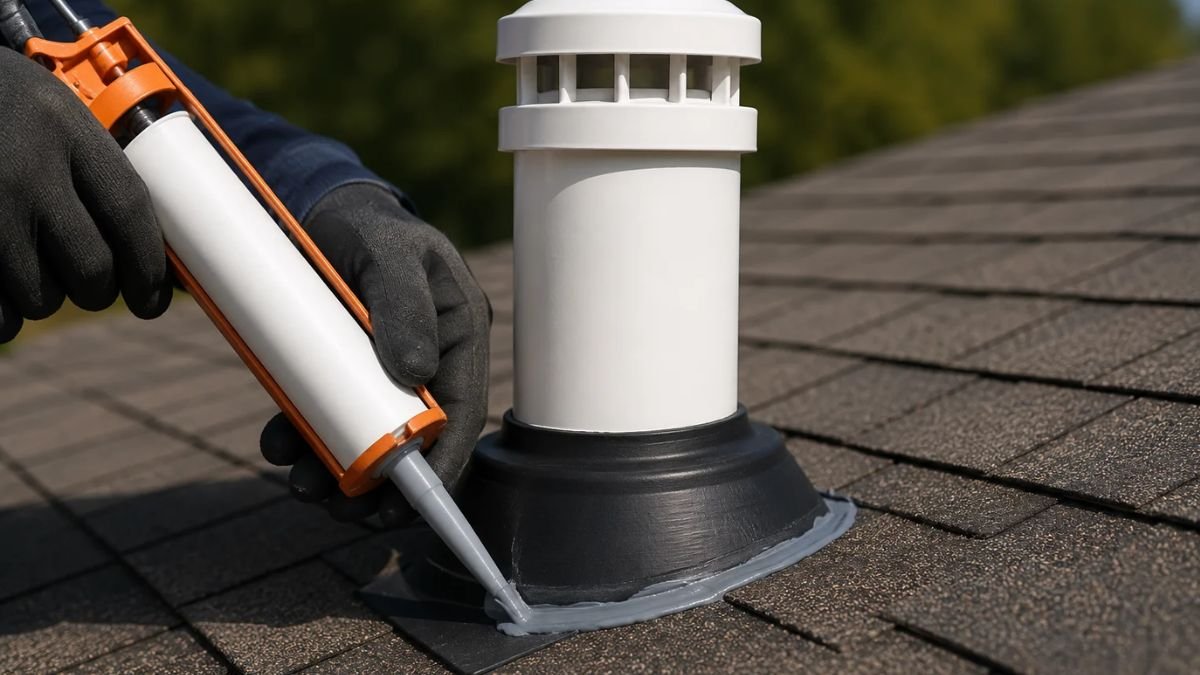
Your plumbing vent pipe passes through the roof. At that penetration point, there’s a rubber boot (sometimes called a pipe boot or vent flashing) that creates a watertight seal around the base of the pipe where it meets the roofing material. This seal keeps rainwater from entering your home through the gap around the pipe.
Over time, that rubber boot deteriorates. Sun exposure breaks it down, rain and temperature swings cause it to crack, and wind lifts its edges. The rubber gets brittle, shrinks slightly, and eventually pulls away from the pipe or the roof surface. Once the seal fails, you have an opening that lets water into your attic, ceiling, and walls every time it rains.
Plumbing vent resealing is the process of replacing or repairing that rubber boot and the sealant around it to restore the watertight seal. It’s a relatively straightforward repair when caught early. When ignored, it leads to water damage, rot, mold, and eventually structural issues that cost far more to fix than the resealing itself would have.
Why Charleston Homes Are Especially Vulnerable
The Lowcountry is harder on roof seals than most places in the country. Several factors unique to our area accelerate the deterioration of vent boot seals.
Intense UV exposure. Charleston gets an average of 217 sunny days per year. That UV exposure is the primary enemy of rubber pipe boots. The same sun that fades your deck furniture is slowly breaking down the rubber around your vent pipes. Most standard rubber boots begin to show significant cracking after 8 to 12 years, but in Charleston’s sun intensity, we often see failures as early as 7 years.
Hurricane-force winds and heavy rain. Strong storms can lift the edges of vent flashing, break the sealant bond, or shift the boot’s position on the pipe. And once there’s even a tiny gap, Charleston’s heavy downpours will find it. We get an average of 50 inches of rain per year here, and during hurricane season, a single storm can dump several inches in hours. A failed seal that might take months to cause visible damage in a drier climate can cause ceiling stains within a single heavy rain event in Charleston.
Humidity and temperature swings. Our summers are long and humid, followed by occasional sharp cold snaps in January and February. That cycle of expansion and contraction stresses rubber and sealant compounds, causing them to crack and pull away faster than they would in a more temperate climate.
Salt air near the coast. For homes on James Island, Sullivan’s Island, Isle of Palms, and Folly Beach, salt air corrodes the metal flashing that works alongside the rubber boot. Once the metal deteriorates, even a new rubber seal won’t hold properly without replacing the flashing underneath.
Older roofing on historic and aging homes. Many homes in downtown Charleston, West Ashley, and surrounding areas have roofs that have been patched or layered multiple times over the decades. Each time the roof is worked on, the vent boot can be disturbed or simply left alone while everything around it gets replaced. We’ve seen homes where a 20-year-old pipe boot is sitting on a 3-year-old roof because nobody thought to replace it.
Signs Your Vent Seal May Have Failed
Some of these signs are obvious. Others are easy to miss or blame on something else entirely.
Water stains on your ceiling near the roofline. If you notice brown or yellowish stains on the ceiling of a top-floor room, especially near the center of the house (where vent pipes typically run), a failed vent boot is one of the first things to check. Many homeowners assume these stains are from a general roof leak, but the vent pipe penetration is one of the most common failure points on any roof.
Sewer smell inside the house that comes and goes. A failed vent seal can allow the vent pipe itself to shift or become partially obstructed, which disrupts the air balance in your drainage system. When that happens, P-traps can lose their water seals, allowing sewer gas to enter your home. If you notice a sulfur or rotten-egg smell that appears intermittently, especially in bathrooms or near drain locations, a compromised vent could be the cause.
Drains that gurgle when other fixtures are used. When a toilet gurgles after you run the bathroom sink, or the kitchen drain makes bubbling sounds when the washing machine empties, air is being pulled through water traps because the vent system isn’t equalizing pressure properly. This is one of the most misunderstood plumbing symptoms. Homeowners often assume the drain is clogged when the real problem is above them on the roof, not below them in the pipe.
Slow drains in multiple fixtures. A single slow drain usually means a localized clog. Multiple slow drains across the house, especially when they all seem to develop around the same time, can point to a venting problem rather than individual blockages.
Visible damage to the pipe boot from the ground. If you can see the vent pipe from your yard (most homes have at least one visible from ground level), look for a rubber boot that appears cracked, lifted at the edges, or visibly deteriorated. If the rubber looks dry, brittle, or is separating from the pipe, it’s time for resealing.
Moisture, mold, or rot in the attic near the vent pipe. If you have attic access, check where the vent pipe passes through the roof. Dampness, dark staining, or visible mold around the penetration point means water has been getting in.
What Does the Resealing Process Involve?
Plumbing vent resealing is not a complicated job, but it does require roof access, the right materials, and an understanding of how the seal integrates with both the plumbing system and the roofing material.
Assessment. We inspect the existing boot, flashing, and surrounding roofing material to determine whether the boot can be resealed or needs full replacement. If the rubber is cracked through or the metal flashing underneath has corroded, patching with caulk isn’t a lasting solution.
Removal and preparation. The old boot is carefully removed along with deteriorated sealant. The pipe surface and surrounding roof material are cleaned to ensure the new seal bonds properly.
New boot installation. A new rubber, neoprene, or EPDM boot is fitted over the vent pipe and seated against the roof surface. The base is sealed to the roofing material with appropriate sealant, and the top is secured snugly around the pipe.
Flashing and final seal. If the vent uses metal flashing, it’s inspected and replaced if needed. A final layer of roof-grade sealant is applied around the base and seams for a secondary barrier against water.
Interior check. If there were signs of water damage in the attic or ceiling, we check the area and assess whether rot, mold, or compromised insulation needs attention.
Can You Reseal a Vent Boot Yourself?
Technically, yes. But there are two important considerations.
Roof safety. Falls from residential roofs are one of the most common causes of serious injury for homeowners doing DIY work. If your roof is steep, high, wet, or unfamiliar to you, the risk is not worth the savings. A professional can complete this repair in under an hour.
Diagnosing the real problem. Resealing only fixes the roof penetration. If the vent pipe itself has issues (a partial blockage, a crack, a loose connection inside the wall), sealing the boot won’t resolve the plumbing symptoms. A plumber can assess the full vent system, not just the exterior seal.
If you’re comfortable on your roof and the boot just needs fresh sealant, you can apply roofing caulk as a temporary measure. For a lasting repair, especially if the boot is cracked or the flashing is deteriorated, a full replacement is the better investment.
Is This a Plumbing Job or a Roofing Job?
If the only issue is a deteriorated roof seal with no plumbing symptoms (no sewer smell, no gurgling, no slow drains), a roofer can handle the boot replacement as part of roof maintenance.
If you’re experiencing plumbing symptoms alongside a potential seal issue, start with a plumber. We can assess whether the problem is just the external seal or whether the vent pipe itself has a blockage, a debris obstruction, or a connection problem affecting drainage across the house.
In many cases, the answer is both: the seal needs replacing AND there’s a venting issue below the roofline that a roofer wouldn’t identify.
How Often Should You Check Your Vent Seals?
For most Charleston homes, a visual inspection of your vent pipes from the ground or a ladder once a year is a good habit. Look for cracked or lifted rubber, visible gaps between the boot and pipe, and obvious deterioration.
After any major storm, especially during hurricane season, take another look. High winds and heavy rain are the most common triggers for sudden seal failure.
If your vent boots are more than 10 years old and have never been replaced, schedule a professional inspection. A $150 to $300 resealing today prevents thousands in water damage, attic mold remediation, and ceiling repair.
We include vent pipe checks as part of our annual plumbing maintenance and inspection service. It takes two minutes to check and can save you from a problem you’d never see coming.
Frequently Asked Questions
How much does plumbing vent resealing cost?
For most homes, vent boot replacement and resealing costs between $150 and $350 per vent, depending on roof type, accessibility, and whether the metal flashing also needs replacing. Homes with multiple vent penetrations may have more than one boot that needs attention. We give you a clear price before starting.
Can a failed vent seal cause sewer smell in my house?
Not directly from the seal itself, but a failed or shifted boot can allow the vent pipe to move or become partially blocked, disrupting pressure balance in your drainage system. When that happens, P-traps lose their water seal and sewer gas enters the home. If you’re smelling sewer gas and can’t find the source, the vent system is worth investigating.
How do I know if my vent pipe is blocked?
The most common signs are gurgling sounds from drains when other fixtures are in use, multiple slow drains throughout the house, and intermittent sewer odor. If drain cleaning doesn’t resolve these symptoms, a vent blockage is the likely cause. We can inspect and clear obstructions (leaves, debris, bird nests) from the roof.
Should vent boots be replaced during a roof replacement?
Absolutely. Any reputable roofer should replace all rubber pipe boots during a full reroof. But this doesn’t always happen. We’ve seen plenty of homes where a brand-new roof was installed around old, cracked pipe boots. If you’re getting a new roof, confirm that all pipe boots and vent flashing will be replaced as part of the job.
Will my homeowner’s insurance cover water damage from a failed vent boot?
It depends. Most policies cover sudden, accidental water damage but exclude damage from deferred maintenance or gradual deterioration. A vent boot that’s been visibly cracked for years may not produce a covered claim. Storm damage to a boot likely will. Regular maintenance and prompt repairs work in your favor.
When should I call a plumber versus a roofer for vent issues?
If you’re only seeing a roof leak near the vent with no plumbing symptoms, a roofer can handle it. If you’re experiencing sewer smell, gurgling, slow drainage, or any combination of plumbing symptoms, start with a plumber. We evaluate both the vent system and the seal, and coordinate with a roofer if roof work beyond our scope is needed.
Keep It Sealed. Keep It Simple.
Your plumbing vent does its job quietly every single day. You only notice it when something goes wrong, and by then, the damage may have been building for months. A quick inspection and a timely reseal are some of the easiest and most affordable ways to protect your home from water damage and plumbing headaches.
If you’re not sure whether your vent seals are in good shape, give Pineapple Plumbing a call or schedule a maintenance visit. We’ll check your vents, your connections, and everything else that matters, and give you a straight answer about what needs attention and what doesn’t.
Pineapple Plumbing. Serving Charleston and the Lowcountry with honest work and Southern hospitality.


