
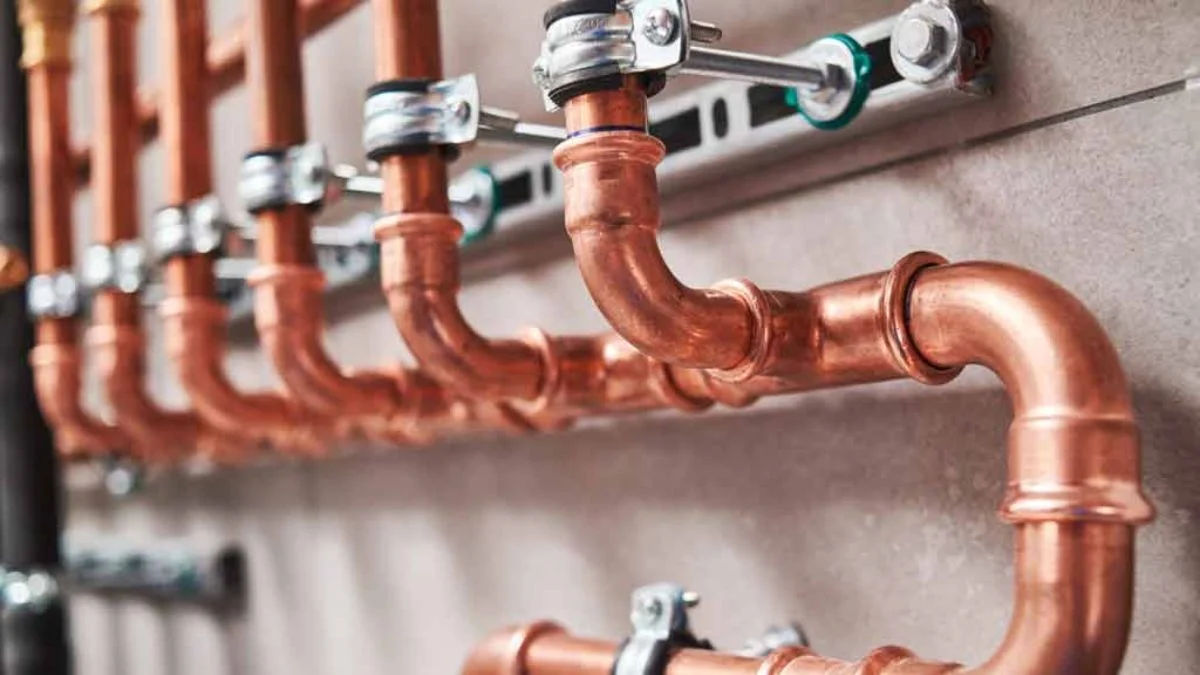
Copper plumbing typically lasts 50 to 70 years, though the actual lifespan depends on the type of copper installed, water chemistry, water pressure, and installation quality. Age alone doesn’t determine whether pipes need replacing. A 60-year-old copper system in good condition may have years of service left, while a 25-year-old system with repeated pinhole leaks may need attention now.
That distinction matters, and it’s the thing most homeowners get wrong. We’ve inspected Charleston-area homes where the copper was original to a 1965 build and still performing well, and we’ve replaced copper in homes built in the 1990s because the pipe was failing in multiple places. The condition of the system and the pattern of failures tell you far more than the calendar does.
Here’s how to read what your plumbing is actually telling you.
How Long Does Copper Plumbing Normally Last?
Most residential copper supply lines last 50 to 70 years. Some systems exceed that. Others fail considerably earlier.
The range is wide because copper doesn’t fail on a schedule. It fails in response to conditions: what’s flowing through it, how much pressure it’s under, how it was installed, and what type of copper was used in the first place.
Copper became the residential standard in the 1960s and remained dominant through the 1990s, which means a large share of Charleston-area homes built during those decades still have their original copper supply lines. Many of them are fine. Some of them aren’t. The only way to know which category your home falls into is to look at the pipe’s actual condition.
Does Copper Type Affect Lifespan?
Yes, significantly. Copper pipe comes in three wall thicknesses, and the difference in longevity between them is substantial.
Type M has the thinnest walls and was widely used in residential construction because of cost. Its thin walls give it less material to lose before a pinhole develops. In aggressive water conditions or under high pressure, Type M is the first to show problems.
Type L has thicker walls and is the most common choice for residential supply lines today. It handles pressure and corrosion better than Type M.
Type K has the thickest walls and is typically used for underground water service lines. It’s the most durable and the most expensive.
You can identify the type by the color-coded printing along the pipe: red for Type M, blue for Type L, green for Type K. If your home has Type M copper and you’re experiencing recurring leaks, the pipe thickness is part of the explanation.
What Shortens the Life of Copper Pipes?
Several factors accelerate copper deterioration, and most of them have nothing to do with age.
Water chemistry. Acidic water (low pH) corrodes copper from the inside. High mineral content contributes to scaling that restricts flow. Chloramines, used by many municipal water systems as a disinfectant, have been associated with accelerated pitting in copper pipe.
High water pressure. Residential pressure above 80 psi stresses joints, accelerates internal erosion, and increases the rate at which the pipe wall thins. This is one of the most common and most correctable causes of premature copper failure.
Poor installation. Pipes that weren’t properly reamed after cutting leave burrs that create turbulence and erode the pipe wall from the inside. Excess flux left inside a joint after soldering continues to corrode the copper for years.
Water velocity. Undersized pipe or an oversized recirculation pump moves water faster than the pipe was designed to handle, gradually eroding the interior wall at bends and fittings.
Electrolysis. When copper contacts dissimilar metals without proper isolation, galvanic corrosion can develop at the contact point.
What Are the Signs Copper Pipes Are Deteriorating?
Pinhole leaks. Small holes, usually under an eighth of an inch, that develop from internal corrosion working outward. They often appear first as a small damp spot, a water stain, or a barely audible drip. Pinhole leaks are the most common early indicator of copper deterioration.
Green or blue-green staining around joints and fittings. Green patina on the exterior of a pipe usually means water has been present there, either from a slow leak or condensation.
Blue-green staining in sinks, tubs, or on fixtures. This indicates copper is leaching into your water, which happens when the interior of the pipe is corroding.
Gradually declining water pressure. Internal corrosion and scale buildup narrow the pipe’s interior diameter over time. If pressure has dropped slowly across the whole house and cleaning aerators hasn’t helped, the supply lines are worth inspecting.
Visible pitting or thin spots on exposed pipe. In crawl spaces and under sinks where copper is visible, look for dimpled areas, discoloration, or uneven surface.
Why Do Pinhole Leaks Happen in Copper?
Pinhole leaks develop from the inside out. Corrosive water conditions, turbulence from poor installation, or excess flux left in a joint create a small area where the pipe wall begins to pit. That pitting deepens over years until it penetrates the wall completely.
By the time water appears on the outside, the corrosion process has been running for a long time. That’s why pinhole leaks so rarely occur in isolation: if conditions inside one section of pipe were aggressive enough to eat through the wall, the adjacent sections have been exposed to the same conditions for the same amount of time.
This is the single most important thing we tell homeowners about pinhole leaks. The leak you found isn’t the whole story. It’s a data point about the condition of the system.
Does One Copper Leak Mean I Need Repiping?
No. One leak, on its own, is a repair.
If you’ve had a single pinhole leak in an accessible section and the rest of the visible pipe looks sound, a targeted copper pipe leak repair is almost always the right answer. Cut out the failed section, install new pipe and fittings, and monitor the system.
What changes the calculation is the pattern. One leak is an event. Two leaks in different parts of the house within a year or two is a trend. Three or more is a system telling you it’s reached the end of its reliable service life.
We don’t recommend repiping based on a single failure, and we’re skeptical of anyone who does.
How to Decide: Monitor, Repair, Replace a Section, or Repipe
Here’s the framework we use when evaluating a copper system.
| What you’re seeing | What it may mean | Recommended next step |
|---|---|---|
| No leaks, good pressure, pipe looks sound in accessible areas | System is performing normally regardless of age | Monitor. Annual inspection if the system is 40+ years old. |
| One pinhole leak, surrounding pipe in good condition | Isolated failure, possibly from a localized flaw | Spot repair. Note the date and location. |
| Two or more leaks in the same run or same area of the house | Localized conditions are aggressive in that section | Replace that section rather than patching repeatedly |
| Leaks appearing in different parts of the house over 1 to 2 years | System-wide deterioration is underway | Evaluate for whole-home repiping |
| Declining pressure across the house plus visible corrosion | Internal corrosion and scaling throughout the system | Inspection to assess system condition and scope |
| Blue-green staining on fixtures plus recurring leaks | Copper is actively leaching, corrosion is advanced | Evaluate for repiping |
| Active leak causing water damage right now | Structural failure requiring immediate attention | Emergency service, then assess system |
The goal of this framework is to match the scope of the work to the actual condition of the plumbing. Patching leak after leak on a failing system wastes money. Repiping a sound system because of one bad fitting wastes more.
Should You Replace Copper With Copper or PEX?
When replacement is warranted, you have two practical options.
Copper is durable, handles heat well, and has a proven long-term track record. It costs more in material and labor because it requires soldered joints. If your existing copper failed due to installation issues or high pressure rather than water chemistry, new copper installed correctly with pressure regulation can perform well for decades.
PEX is flexible cross-linked polyethylene, now the standard for new construction and repiping. It costs less, installs faster with fewer joints, resists freeze damage better, and is immune to the pitting corrosion that causes copper pinhole leaks. It can’t be run in direct sunlight, and it has a shorter track record than copper, though it’s been in widespread use since the 1990s.
For most Charleston-area repipes, PEX is the practical choice. If you prefer copper and understand the cost difference, it’s a legitimate option. We’ll install either and give you our honest assessment.
How Can I Tell How Old My Pipes Are?
Start with the age of the home. If your house was built between the 1960s and the 1990s and hasn’t been repiped, the supply lines are likely original copper.
Look at the pipe itself in your crawl space, garage, or under sinks. Copper is reddish-brown metal, and the type designation may still be printed along its length. Soldered joints rather than modern push-fit connectors suggest older installation.
Check permit records. Charleston County and municipal records may show whether a repipe was performed and when. And look for mixed materials: if part of the home has copper and part has PEX or CPVC, a partial repipe was likely done at some point.
If you’re not sure what you have, a plumbing inspection identifies the material, assesses its condition, and gives you a realistic picture of remaining service life.
What Charleston Homeowners Should Watch For
A few things are worth knowing about copper in Lowcountry homes.
Crawl-space copper deserves regular attention. Many Charleston-area homes are built on raised foundations with supply lines running through the crawl space. Our humidity keeps those spaces damp, so condensation forms on cold water lines much of the year. That exterior moisture won’t cause pinhole leaks (those develop from the inside), but it accelerates corrosion at joints and makes small leaks harder to spot because everything down there is already damp.
Hidden leaks stay hidden longer here. In a drier climate, a small leak behind a wall might partially dry between cycles. In Charleston’s humidity, wet materials stay wet. A pinhole leak running for months causes significantly more damage than the same leak elsewhere, which is why we recommend investigating hidden plumbing leaks rather than waiting to see if the stain grows.
Check your water pressure. High pressure is one of the most correctable causes of premature copper failure. A gauge costs about $10 at any hardware store. Screw it onto a hose bib and read it. Anything consistently above 80 psi is stressing your pipes. Our guide to maintaining home plumbing in South Carolina covers this and other seasonal checks.
When Is a Copper Leak an Emergency?
Most pinhole leaks are not emergencies. They’re small, slow, and give you time to schedule service.
A copper leak becomes urgent when water is flowing fast enough to cause active damage, when it’s above or inside an electrical panel or fixture, when it’s saturating structural materials, or when you can’t stop it by closing a fixture shut-off valve.
If that’s your situation, shut off the main water supply to the house and call for emergency plumbing service. If the leak is slow and contained, place a bucket under it, note where it is, and schedule a repair.
Frequently Asked Questions
How long do copper pipes usually last?
Most residential copper supply lines last 50 to 70 years. Type M (thin wall) may fail sooner, particularly in aggressive water conditions or under high pressure. Type L is more durable and common in residential use today. Actual lifespan depends more on water chemistry, pressure, and installation quality than on the calendar.
Can copper pipes last 100 years?
Some do, particularly thicker Type K or Type L copper installed correctly in favorable water conditions. But it’s not something to count on. Plenty of copper systems need attention well before 50 years, especially thin-wall Type M. Condition matters more than any expected lifespan number.
How do I know if my copper pipes need replacing?
Look at the pattern of failures rather than the age. Recurring pinhole leaks in different parts of the house, declining water pressure throughout the home, blue-green staining on fixtures, and visible pitting all suggest system-wide deterioration. A single leak in an otherwise sound system is a repair, not a replacement.
What causes pinhole leaks in copper pipes?
Internal corrosion. Acidic or chemically aggressive water, high pressure, excessive water velocity, and installation flaws (burrs from unreamed cuts, excess flux left in joints) create conditions where the pipe wall pits from the inside until it penetrates. Because the cause is usually system-wide, pinhole leaks tend to recur once they start.
Should I repipe after one copper leak?
No. One leak in an accessible section with sound surrounding pipe is a straightforward repair. Document when and where it happened. If a second and third leak appear in different areas over the following year or two, that pattern justifies evaluating the system as a whole.
Is PEX better than copper for replacement?
For most residential repipes, PEX is the practical choice: lower cost, faster installation, fewer joints, freeze resistance, and immunity to the pitting corrosion that causes copper pinhole leaks. Copper remains a legitimate option with a longer proven track record and better heat tolerance. The right choice depends on your budget, your home’s configuration, and your preference.
Does high water pressure damage copper pipes?
Yes. Residential pressure above 80 psi accelerates internal erosion, stresses soldered joints, and shortens the service life of both pipes and fixtures. It’s one of the most common causes of premature copper failure and one of the easiest to correct with a pressure-reducing valve. Testing your pressure takes about two minutes with an inexpensive gauge.
Not Sure What Condition Your Pipes Are In?
If you’ve had a leak, noticed pressure changes, or you’re wondering what’s behind the walls of an older Charleston home, an inspection gives you a real answer instead of a guess.
We’ll identify your pipe material, assess its condition, check your water pressure, and tell you honestly whether you’re looking at monitoring, a repair, a section replacement, or a full repipe. If your system is sound, we’ll say so. You can also read about the most common plumbing problems we see in Charleston homes.
Call Pineapple Plumbing at (843) 739-7438 or schedule an inspection online.
Pineapple Plumbing. 503 N Commodore Way, Summerville, SC 29483.


