
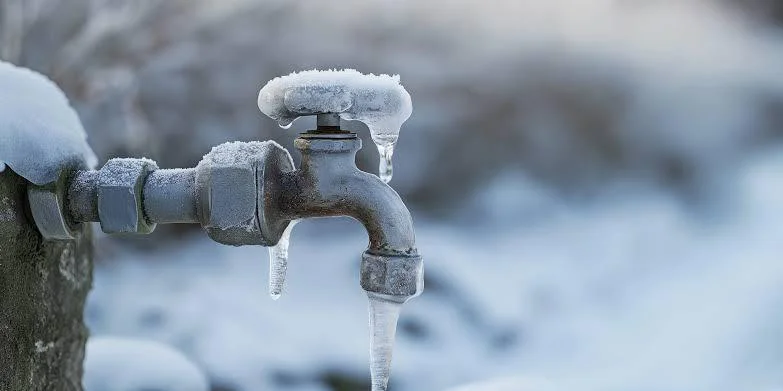
If a freeze is in the forecast, here’s what matters most tonight: disconnect your garden hoses, cover your outdoor faucets and backflow preventer, wrap any pipes you can see under the house, let a first-floor faucet drip overnight, and make sure you know where your main water shutoff is.
That’s the short answer. The rest of this guide explains which parts of a Charleston home actually freeze, how to drip the right faucet, and what to do if a pipe freezes or splits anyway.
Lowcountry winters are mild. Most nights never get close to freezing. But that’s exactly why short cold snaps catch people off guard. Many local homes were built with pipes running through vented crawl spaces, exterior walls and garages, with little insulation, because the plumbing rarely has to deal with a hard freeze. A night in the low 20s with wind can be enough to cause a problem.
Quick Freeze Checklist
Do these before the temperature drops, ideally in daylight:
- Disconnect garden hoses from every outdoor spigot.
- Cover outdoor faucets with an insulated cover or wrap.
- Check under the house and in the garage for exposed pipes, and wrap them with foam pipe insulation, towels or blankets.
- Wrap your backflow preventer, if you have one, in plastic or a purpose-made cover.
- Open sink cabinet doors on exterior walls so warm air reaches the pipes.
- Plan to drip one indoor faucet overnight, on the first floor.
- Find your main water shutoff, clear anything around it, and make sure it turns.
Most of these steps come straight from Charleston Water System, which recommends disconnecting hoses and covering spigots, insulating exposed pipes and backflow preventers with towels, blankets or foam pipe insulation, and wrapping backflow preventers in plastic or a cover.
Which Pipes Are Most Likely to Freeze in a Charleston Home?
Pipes don’t all freeze at 32°F the moment the thermometer touches it. What matters is how exposed the pipe is, whether it’s insulated, whether wind is hitting it, and how many hours the cold lasts. A pipe inside a heated kitchen wall can ride out a night at 25°F. A bare copper line in a drafty crawl space may not.
| Location | Freeze risk | Why | What to do |
|---|---|---|---|
| Outdoor hose bibs | Highest | Fully exposed; a connected hose traps water | Disconnect hose, add insulated cover |
| Exposed backflow devices | Highest | Sits above ground in open air | Wrap in plastic or buy a cover, insulate |
| Crawl-space pipes | High | Cold air and wind move through vented crawl spaces | Insulate exposed runs, close operable vents, drip a faucet |
| Garage or unheated-room plumbing | Moderate to high | No heat source, often no insulation | Insulate, keep garage door closed |
| Pipes in exterior walls | Moderate | Thin insulation, drafts around penetrations | Open cabinets, seal drafts, drip that faucet |
| Interior pipes in heated space | Low | Surrounded by conditioned air | Usually nothing beyond keeping the heat on |
Outdoor equipment tends to go first. Charleston Water officials have noted that backflow preventers and irrigation systems are often the first pipes to burst because they sit outside.
Why Freezes Hit Different Parts of the Lowcountry Differently
Downtown Charleston is surrounded by water, and that keeps it warmer on cold nights. Inland areas cool off faster. National Weather Service Charleston data shows the gap clearly: the median first freeze date is November 16 for Summerville and McClellanville, while downtown Charleston’s median first freeze doesn’t come until December 24.
So if you live in Summerville, Goose Creek, Moncks Corner or other inland spots, expect more freezing nights than someone on the peninsula. It happens downtown too, and sometimes early. The earliest freeze on record for downtown Charleston came on November 3, 1954, when it dropped to 28 degrees.
Check the forecast for your own area, not just “Charleston.”
1. Insulate Exposed Pipes in Crawl Spaces and Unheated Areas
You don’t need to insulate every pipe in the house. Focus on the lines that actually sit in cold air: under a raised home, in the garage, in an unheated utility room or along an outside wall where you can reach them.
Foam pipe sleeves from a hardware store are the easiest option. Measure the pipe diameter first, because a sleeve that doesn’t close around the pipe won’t do much. Tape the seams and cover elbows and valves, which people often skip. If a freeze is hours away and you don’t have foam, towels or old blankets tied around the pipe are better than nothing, and CWS lists them as an option.
A few Charleston-specific points:
Older homes on piers, common in parts of downtown, West Ashley, James Island and Mount Pleasant’s Old Village, often have long runs of exposed pipe in a vented crawl space. Those are worth a look before winter, not the night of a freeze.
If your crawl space has vents you can close, close them for the freeze and reopen them afterward. Wind moving through the crawl space pulls heat off pipes quickly. If your crawl space is encapsulated, it’s already sealed.
If you’ve had a pipe freeze in the same spot before, it will probably happen again. That spot may need better insulation, draft sealing, or heat cable installed properly by a professional.
2. Disconnect Garden Hoses and Protect Outdoor Faucets
This is the cheapest fix in the article, and one that gets skipped the most.
A hose left connected holds water against the spigot. When that water freezes, it has nowhere to go, and the pressure can crack the faucet or the pipe just behind it inside the wall. You might not notice until spring when you turn the spigot on and water runs into the wall or under the house.
Before the cold arrives:
Disconnect every hose and drain it. Put an insulated faucet cover over each spigot. They’re inexpensive and install in a minute. If your home has an indoor shutoff for an outdoor faucet, close it and then open the outside spigot to let the line drain.
Then deal with the other outdoor water equipment. Wrap the backflow preventer. Shut down the irrigation system if it has a winter shutdown procedure. And if you have a tankless water heater mounted on an outside wall, Charleston Water has advised dripping hot water as well, so water keeps moving through the unit and its lines. Check your heater’s manual too, since many outdoor models have their own freeze protection that only works if the unit has power.
3. Keep Warm Air Reaching Vulnerable Plumbing
Your heating system protects your pipes, but only the ones it can reach.
Keep the heat on and steady during a freeze. This isn’t the night to turn the thermostat way down. A steady setting overnight costs a little more on the power bill, which is small next to a split pipe.
Open the cabinet doors under kitchen and bathroom sinks that sit on outside walls. That lets room air reach pipes that are otherwise closed off in a cold corner. Move cleaning products out of reach if you have kids or pets.
Keep the garage door closed if there’s plumbing or a water heater in the garage.
Look for drafts. A pipe that freezes every year is often next to a gap where cold air gets in, like where the line passes through the wall, around a crawl-space access door, or near a leaky window. Sealing the draft often solves the problem better than more insulation.
If you use a space heater near vulnerable plumbing, keep it clear of anything flammable and don’t leave it running unattended.
4. Let the Right Faucet Drip During a Freeze
Dripping a faucet is the step people ask about most, and it’s also the one people get wrong. Moving water is harder to freeze, and a slightly open faucet also gives pressure somewhere to go if ice starts forming in the line.
When should you drip? When the forecast calls for temperatures below freezing overnight, especially in the low to mid 20s, for several hours, or when wind is expected. Drip earlier if you know your house has exposed crawl-space pipes or a history of freeze problems.
Which faucet? Charleston Water System says to let a first-floor faucet drip if you have a two-story home. The idea is to pick a faucet on the lowest floor, ideally one whose pipes run through the coldest area, such as a kitchen or bathroom sink on an exterior wall above the crawl space. That keeps water moving through the most vulnerable part of the system.
How much? Not a stream. Charleston Water has said you only need about one drip per second. On a single-handle faucet, set the handle in the middle; on a two-handle faucet, run both hot and cold so both supply lines move.
Overnight only? Generally yes. CWS recommends dripping overnight, with a reminder to make sure the drain isn’t blocked and to turn the water off in the morning. If daytime temperatures stay below freezing, which is rare here but does happen, keep dripping.
What about newer homes? CWS describes dripping as ideal for older homes with a crawl space and uninsulated pipes. A newer slab-on-grade home with plumbing inside heated walls is at much lower risk. But “newer” doesn’t mean “freeze-proof.” Hose bibs, backflow preventers, garage lines, and outdoor tankless heaters freeze regardless of when the house was built. If you aren’t sure where your pipes run, dripping one faucet on a hard-freeze night is cheap insurance.
Why are crawl spaces the problem? In a raised home, the supply lines run through open air under the floor, often with vents letting wind through. That space can get nearly as cold as outside. The water in those lines is also standing still for hours overnight when nobody’s using it, which is exactly when freezing happens.
If you’re worried about wasting water, drip into a bucket or pot and use it for plants or flushing later.
5. Know Where Your Main Water Shutoff Is
Freeze preparation isn’t only about keeping pipes from freezing. It’s about limiting damage if one splits anyway.
A split pipe can release a lot of water fast, and that often happens when the ice thaws and pressure returns. The difference between a small cleanup and a flooded crawl space or ruined drywall is often how fast someone gets the water turned off.
For most single-family homes served by CWS, the shutoff is in the ground near your outdoor spigot, in line with your water meter. Some homes also have an interior valve where the line enters the house.
Find it now, not during an emergency. CWS asks customers to keep the valve clear of overgrowth and easy to reach. Pull back pine straw, clear the box lid, and try turning it. If it’s stuck, corroded, or you can’t find it at all, get it fixed before winter. Show everyone in the house where it is.
What If You’re Leaving Charleston During a Freeze?
A lot of homeowners find a burst pipe only when they come back from holiday travel.
Charleston Water System’s guidance is simple: if you’re planning to leave home, turn off the water at the main shutoff valve to prevent damage from potential leaks. Leave the heat on as well, set low but steady.
A few things to check before you close the main. If your home has a residential fire sprinkler system on the same supply, don’t shut the water off without knowing how that affects the system. With a tank water heater, many units have a vacation or low setting, so check the manual rather than guessing. For a second home or rental that sits empty for long stretches, a proper winterization by a plumber may make more sense than shutting the valve and hoping.
What to Do If a Pipe Is Already Frozen
The main warning sign: during extremely cold weather, little or no water coming out when you open a faucet can mean your pipes are frozen. You may also see frost on an exposed pipe or notice one faucet works while another doesn’t.
Symptom: no water or a trickle at one fixture. Risk: ice is blocking the line, and a crack may already exist. Action:
Shut off the main water first. CWS advises doing this before trying to thaw pipes yourself, then applying heat to the frozen section with a hair dryer or space heater, never leaving the space heater unattended. Open the affected faucet so melting water has somewhere to go. Warm the pipe gradually, starting from the faucet end and working back.
Never use a torch, open flame, propane heater or anything that can overheat the pipe or start a fire. If the frozen section is behind a wall, under the house in a tight spot, or you can’t find it, call a plumber.
When the pipe thaws, turn the water back on slowly and listen for leaks. A pipe can look fine while frozen and only start leaking once water flows again.
What to Do If a Frozen Pipe Bursts
Work in this order:
- Shut off the main water.
- Avoid electrical hazards. If water is near outlets, a panel or appliances, turn off power to that area at the breaker only if you can reach the panel without standing in water. If you can’t, stay out and call for help.
- Control the damage if it’s safe. Move valuables, put down towels and buckets, and open faucets to drain what’s left in the lines.
- Call a plumber. Pineapple Plumbing handles emergency plumbing in Charleston and can repair the damaged section.
Take photos before cleanup if you plan to file an insurance claim.
When Should You Call a Plumber Before a Freeze?
Some problems are better handled on a calm fall afternoon than at midnight in January. Call ahead if:
You have long runs of exposed pipe under the house and aren’t sure what’s protected. A pipe has frozen or burst in the same area before. An outdoor faucet drips, leaks from the handle, or has been cracked. You see corrosion, green crusting on copper, or damp spots under the house. Your main shutoff is stuck, leaking, or missing. Or you just can’t tell which lines are vulnerable.
A plumbing inspection can map where your pipes run, flag weak spots, and check your shutoff before you need it. If you’re already seeing signs of a slow leak, leak detection and pipe repair is worth doing before cold weather adds stress to that line.
Frequently Asked Questions
At what temperature should I worry about pipes freezing?
Start taking precautions when overnight lows drop below freezing, and take it seriously once forecasts reach the mid-20s for several hours. There’s no single temperature where every pipe freezes. Exposure, wind and duration matter more than one number.
Should I drip faucets during a Charleston freeze?
Yes, if your home has a crawl space, exposed pipes or a history of freeze problems. Charleston Water System recommends dripping an indoor faucet overnight, especially in older crawl-space homes.
Which faucet should I drip?
Drip a faucet on the first floor, ideally on an exterior wall above the crawl space. About one drip per second is enough.
Do newer homes need freeze protection?
Yes, though less of it. Interior pipes in a newer, well-insulated home rarely freeze, but outdoor spigots, backflow preventers, garage plumbing and outdoor tankless heaters still can.
Should I disconnect my garden hose?
Yes. A connected hose traps water in the spigot, and when it freezes it can crack the faucet or the pipe inside the wall.
How can I tell if a pipe is frozen?
Little or no water from a faucet during freezing weather is the most common sign. Frost on an exposed pipe is another.
Can a pipe start leaking after it thaws?
Yes. Ice can crack a pipe while it’s frozen, and the leak often shows up only once water flows again. Turn water back on slowly and check for leaks.
Should I shut off my water if I’m leaving town during a freeze?
Yes. Charleston Water System recommends shutting off the main valve when you leave. Keep the heat on too, and check any fire sprinkler system first.
Worried About Your Pipes Before the Next Charleston Freeze?
Most freeze damage around here comes from a few spots: an exposed crawl-space line, a hose left on a spigot, a backflow preventer nobody wrapped, or a shutoff valve that won’t turn when it’s needed.
Pineapple Plumbing is locally owned, veteran-owned and owner-operated, with more than 22 years of combined plumbing experience. We can look at your exposed lines, outdoor faucets and shutoff valve, point out what actually needs attention, and skip what doesn’t. You’ll get an honest diagnosis and clear pricing, with no scare tactics.
Call Pineapple Plumbing at (843) 739-7438 or schedule service online.


