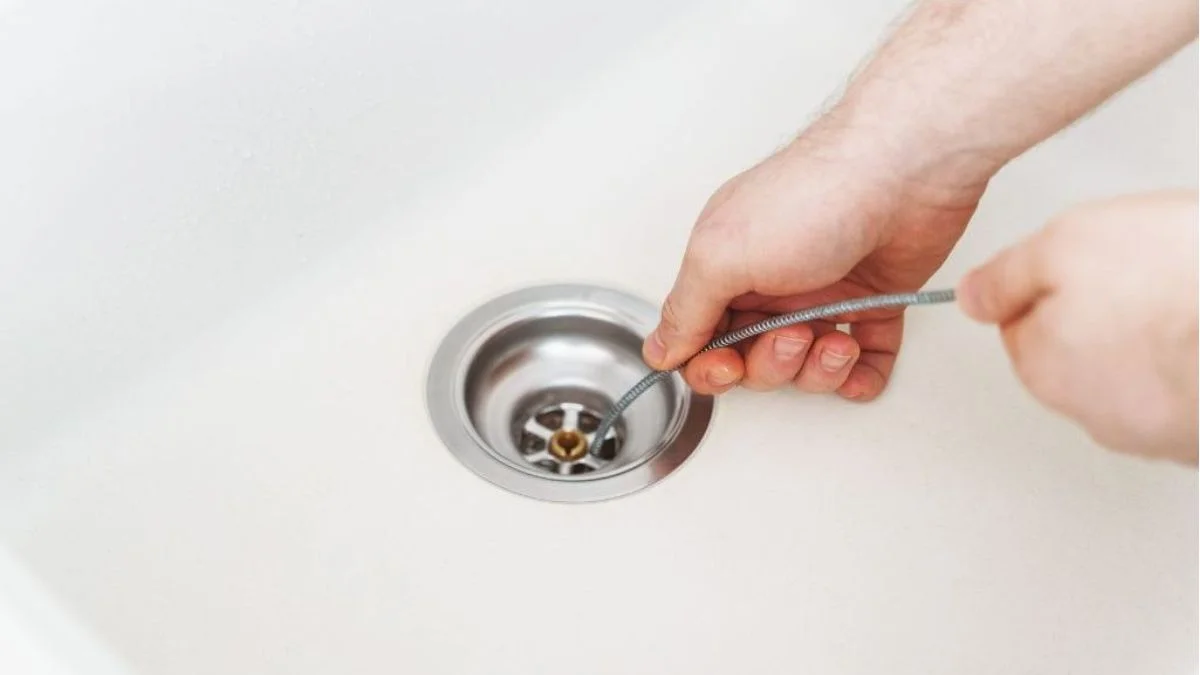
To use a plumbing snake safely, insert the cable end into the drain opening, turn the handle clockwise while applying gentle forward pressure, and keep feeding cable until you feel the clog break up or catch on the auger head. Then slowly pull the cable back out, clean the debris off the end, and flush the drain with water to confirm it’s clear. Never force the cable, and never use a standard drain snake in a toilet (you need a toilet auger for that).
That covers the basic technique. But the real question most homeowners are trying to answer is: “Is this actually a clog I should snake, or is the drain telling me something bigger is wrong?”
At Pineapple Plumbing, we clear drains across Charleston every day, and many of those calls come from homeowners who already tried snaking on their own. Sometimes the cable wouldn’t advance. Sometimes the drain cleared but clogged again within weeks. This guide covers safe technique for each fixture, but it also covers when snaking won’t solve the problem and could make things worse.
What Does a Plumbing Snake Actually Do?
A plumbing snake (also called a drain auger) is a flexible metal cable coiled inside a drum with an auger head on one end and a crank handle on the other. When you feed the cable into a drain and turn the handle, the rotating auger head either breaks the clog apart so it can flush downstream, or catches the material so you can pull it back out.
It works well on soft blockages like hair, soap buildup, and food debris. Where it doesn’t work well: mineral scale, tree roots, collapsed pipe sections, or heavy grease coating the pipe walls. A hand snake can poke a hole through these, but it won’t remove the underlying cause.
Plumbing Snake vs. Toilet Auger: Why It Matters
A drain snake (hand snake) has an exposed metal cable, typically ¼-inch and 15 to 25 feet long. It works on sinks, showers and bathtub drains.
A toilet auger (closet auger) is a separate tool with a short 3-foot cable inside a rigid, curved tube with a rubber or vinyl sleeve on the end. That sleeve protects the porcelain. Never use a regular drain snake in a toilet. The exposed metal cable will scratch the porcelain glaze permanently, and the narrow cable can tangle inside the toilet’s built-in trap instead of clearing it.
Motorized augers are professional-grade tools with long, heavy cables. They deliver real torque and can cut through tough blockages, but they can also crack pipe joints and damage older piping if used without experience.
What Should You Try Before Reaching for a Snake?
Check for a surface clog. Pull the drain stopper or strainer and look for visible hair or debris at the opening. Needle-nose pliers or a bent wire hanger often solve the problem in seconds.
Use a plunger. A cup plunger works on sinks. A flange plunger works on toilets. Fill the fixture with enough water to cover the plunger cup and use firm, controlled strokes. This clears a surprising number of clogs.
Check the P-trap. For sinks, place a bucket underneath, unscrew the slip nuts, and pull the trap off. The clog is often sitting right inside. Clean it out, reassemble, and test.
How to Safely Snake a Sink
Remove the P-trap if possible for direct access to the wall pipe. Feed the cable in a few inches at a time, turning the handle clockwise as you push forward. Keep the handle close to the pipe entrance so the cable doesn’t whip or kink.
When you feel resistance, you’ve either hit a pipe bend or a clog. A pipe bend feels solid and rigid: the cable will resist briefly, then slide past as you keep cranking. A clog feels softer, sometimes spongy, and the cable may push through suddenly or catch.
Once you feel the cable break through or grab the clog, pull back slowly while continuing to rotate. Have a bucket ready. After removing the snake, reassemble the P-trap and run hot water for a full minute to flush loosened debris.
How to Snake a Shower or Bathtub Drain
Remove the drain cover or strainer and pull out any visible hair first. Feed the snake cable into the drain opening and crank clockwise. Shower drains connect to a P-trap below the floor, so you’ll feel the cable hit the bottom of the trap quickly.
Most shower and tub clogs are within 2 to 5 feet of the drain opening. If you’ve gone past 10 feet without resistance, the problem is likely further in the system than a hand snake can effectively reach.
How to Use a Toilet Auger Without Damaging Porcelain
Place the rubber sleeve end into the toilet bowl opening, angled to follow the drain path at the bottom. Crank the handle clockwise to feed the short cable through the toilet’s internal trap. When you feel the clog, keep cranking to push through or hook it. Pull the auger back slowly and flush to test.
If it doesn’t clear after two or three attempts, the clog is likely past the toilet’s trap and into the floor drain. That requires a longer cable fed from a cleanout access point, which is professional territory.
What Should You Do If the Cable Won’t Move?
Stop pushing. If the cable locks up and won’t advance or retract, forcing it risks kinking the cable inside the pipe or damaging the pipe itself.
Try reversing direction: rotate counterclockwise while pulling back gently. This often frees the cable. If it stays stuck, you may be dealing with an offset pipe joint, a collapsed section, or heavy root intrusion, all of which need a plumber with a camera to diagnose.
Can a Plumbing Snake Damage Pipes?
Yes, in certain situations. A hand snake used gently on modern PVC or ABS drains is unlikely to cause damage. But damage does happen with old cast-iron pipes (common in Charleston homes built before the 1970s, where corroded interior walls are fragile), galvanized steel pipes that are heavily scaled and narrowed, motorized snakes used by inexperienced operators, or a cable that’s the wrong size for the drain.
If your home has older pipe materials and you’re not sure of their condition, go carefully or consider having a plumber handle it. A general plumbing assessment can tell you what you’re working with before you start feeding cable into pipes you can’t see.
Can Snaking Make a Clog Worse?
It can. If the blockage is grease, sludge, or compacted debris, a snake may push a hole through the center without removing the mass. The drain flows better briefly, then the hole closes. Worse, the snake can compact material more tightly against the pipe walls, or push a clog further downstream into a larger pipe where it’s harder to reach.
This is one of the reasons professional drain cleaning often produces better long-term results. A motorized cable with a cutting head or hydro jetting actually removes buildup from the pipe walls rather than just punching a temporary channel through it.
What If You Already Used Chemical Drain Cleaner?
This is a safety issue. If you’ve poured Drano, Liquid-Plumr, or a similar product into a drain and it didn’t work, caustic liquid is now sitting in your pipe. Sticking a snake into that drain can splash the chemical back at you. These products contain lye or sulfuric acid that can burn skin and eyes.
If you’ve already used chemicals, flush with cold water for several minutes and wait at least 24 hours before snaking. Wear safety glasses and chemical-resistant gloves. If you call a plumber, tell them what you poured in, because they need to know before they start work.
Better yet, skip chemical drain cleaners entirely. They rarely solve the problem, they can weaken pipes, and they create a hazard for anyone who works on the drain afterward.
Why Is the Drain Still Slow After Snaking?
A drain that clears briefly after snaking but slows again points to one of three issues: the clog wasn’t fully removed (the snake punched through it but didn’t extract the mass), the problem is further downstream than your snake reached, or the pipe itself is the problem.
Corroded cast iron, bellied pipe sections, offset joints, and root intrusion all restrict flow in ways no amount of snaking will permanently fix. If a drain re-clogs within weeks, a camera inspection is the logical next step to find out what’s actually happening inside the pipe.
Multiple Slow Drains vs. One Clogged Fixture
One slow fixture usually means the blockage is local, between that drain and the branch line. This is typical hand-snake territory.
Multiple fixtures draining slowly at once, or a toilet that gurgles when you run the sink, suggests the blockage is further downstream in a shared branch line or the main sewer lateral. A hand snake from a single fixture won’t reach it. The line needs to be accessed from a cleanout with professional equipment.
If every drain in the house is affected or wastewater is backing up through a floor drain, stop using water and call a plumber. That’s a main-line blockage.
When Should You Stop DIY and Call a Plumber?
| Problem | What It May Mean | Snake It or Call a Plumber? |
|---|---|---|
| One slow sink, visible hair at opening | Surface clog | Snake it yourself |
| Single clogged toilet | Typical toilet blockage | Use a toilet auger |
| Kitchen sink drains slowly, grease likely | Local grease clog in trap area | Try snaking, but may return |
| Drain re-clogs within weeks of snaking | Roots, corrosion, bellied pipe | Call a plumber for camera inspection |
| Snake cable won’t advance past a certain point | Pipe offset, collapse, or heavy obstruction | Call a plumber |
| Multiple fixtures slow at once | Shared line or main-line blockage | Call a plumber |
| Sewage backing up through floor drain or tub | Main sewer line blockage | Stop water use, call immediately |
| Chemical cleaner was used and didn’t work | Caustic liquid sitting in pipe | Call a plumber (tell them about chemicals) |
Frequently Asked Questions
How far should I feed the snake cable?
For sinks, most clogs are within 5 to 10 feet. For showers and tubs, usually within 5 feet. If you’ve fed more than 15 to 20 feet without hitting anything, the blockage is likely further into the system than a hand snake can effectively reach.
Can I rent a motorized drain snake?
You can, but proceed with caution. Motorized augers deliver significant torque and can damage pipes, crack joints, or whip the cable back. If you’ve never used one, the cost of a service call may be less than the cost of a pipe repair.
Is it safe to snake old pipes?
Depends on the condition. PVC and ABS plastic drains handle a hand snake well. Older cast-iron or galvanized steel pipes are more fragile and can be punctured or cracked, especially by motorized equipment. Check the visible pipes under sinks or in the crawlspace to see what material you’re working with.
What size plumbing snake do I need?
For household sinks, showers and tubs: ¼-inch cable, 15 to 25 feet long. For toilets: a dedicated toilet auger with a 3-foot cable. Anything larger is professional equipment.
Should I run water while snaking?
For sinks, a slow stream of cold water can help flush debris while you work. Don’t use hot water, as it can soften PVC connections and make grease clogs harder to grab. For toilets, don’t add water while augering.
How often should I snake my drains?
You shouldn’t need to on a regular schedule. If a drain clogs once, snaking is a reasonable fix. If the same drain clogs repeatedly, that’s a sign of a deeper issue that needs diagnosis, not more snaking.
Can a plumbing snake go through a vent pipe?
Professional plumbers sometimes access drain lines through roof vent stacks, but it involves working on a roof and knowing the drain layout below. It’s not a DIY approach.
Why does my drain smell even though it’s not clogged?
A dry P-trap (the water seal has evaporated from a drain that doesn’t get used regularly) is the most common cause. Run water for 30 seconds to refill the trap. If the smell persists even with regular use, you may have a venting issue or a crack in the drain line.
Charleston Drain Won’t Clear?
If you’ve tried snaking and the drain is still slow, keeps re-clogging, or you’re seeing problems at more than one fixture, it’s probably time for a closer look. At Pineapple Plumbing, we start with figuring out what’s actually going on inside the pipe before recommending any work. A camera inspection takes the guesswork out of it.
We handle recurring drain clogs and professional drain cleaning across Charleston, Mount Pleasant, West Ashley, James Island, Summerville and the surrounding Lowcountry. We also help homeowners who aren’t sure whether they need a plumber or can handle things themselves. No scare tactics, no unnecessary work. Just an honest look at the drain and a clear explanation of your options.


