Fixture Installation
- Home
- Fixture Installation
Fixture Installation in Charleston, SC
A new faucet or toilet can change the way a room feels, but the part you don’t see matters just as much as the part you do. How it’s connected underneath, whether the shut-off valves still work, whether the supply lines are in good shape. Those details are the difference between a fixture that performs for years and one that causes problems within months.
At Pineapple Plumbing, we install and replace toilets, faucets, sinks, and shower fixtures for homeowners across Charleston, Summerville, Mount Pleasant, West Ashley, North Charleston, James Island, Johns Island, Goose Creek, and the surrounding Lowcountry. Co-owners Austin Holcomb and Austin Webb bring a combined 22 years of experience to every installation, and they’ll tell you that the installation itself matters more than the brand name on the box.
Toilets
A toilet replacement is one of the most common calls we get, and for good reason. Older toilets use 3.5 to 7 gallons per flush. A modern low-flow toilet uses 1.28 gallons or less and flushes just as effectively. That’s real money off your water bill every month.
Before you buy a new toilet, there’s one measurement that matters more than anything else: the rough-in distance. That’s the space from the wall behind the toilet to the center of the floor bolts. Most Charleston homes use a standard 12-inch rough-in, but older homes, especially pre-1970s houses in downtown Charleston and West Ashley, sometimes have 10-inch or 14-inch rough-ins. If the toilet you bought doesn’t match, it won’t fit. We measure before we order and make sure everything lines up.
During installation, we don’t just drop the toilet on the flange. We inspect the flange condition, replace the wax ring (or use a modern wax-free seal when appropriate), check the floor for soft spots or water damage from the old toilet, tighten evenly to avoid cracking the porcelain, and replace shut-off valves and supply lines if they’re corroded or unreliable. A toilet that rocks even slightly after installation will eventually break its seal and leak. We make sure that doesn’t happen.
If you’re considering a comfort-height toilet (about two inches taller than standard), they’re easier to sit down on and stand up from, which makes a real difference for older adults and anyone with mobility concerns. We install standard and comfort-height models in both round and elongated bowls.
Faucets
A faucet swap sounds like a simple job until you’re under the sink and realize the old shut-off valves are frozen, the supply connections are corroded, or the hole configuration in your countertop doesn’t match the new fixture. We see this regularly in Charleston, where coastal humidity accelerates corrosion on brass fittings and chrome connections. A faucet that looks fine from above can have supply lines that are barely holding on underneath.
We start every faucet installation by assessing the connections below the sink. If the shut-off valves won’t close properly, we replace them as part of the job, not as a surprise add-on. If the supply lines are old, stiff, or showing signs of corrosion, we swap those too. The goal is a clean installation you won’t have to think about again.
Before you buy a faucet, here’s what to check: count the holes in your sink or countertop. Kitchen sinks typically have one to four holes. Bathroom sinks usually have a single hole, a 4-inch centerset, or an 8-inch widespread configuration. A three-hole faucet won’t work in a single-hole sink without a deck plate, and a single-hole faucet won’t cover three existing holes without one either. If you’re not sure what you need, send us a photo before you shop and we’ll tell you exactly what will fit.
For kitchens, pull-down sprayer faucets are the most popular choice right now, and for good reason. They’re more functional for rinsing and cleaning than a separate side sprayer. Touchless faucets are increasingly common too, especially in homes with young kids.
Sinks
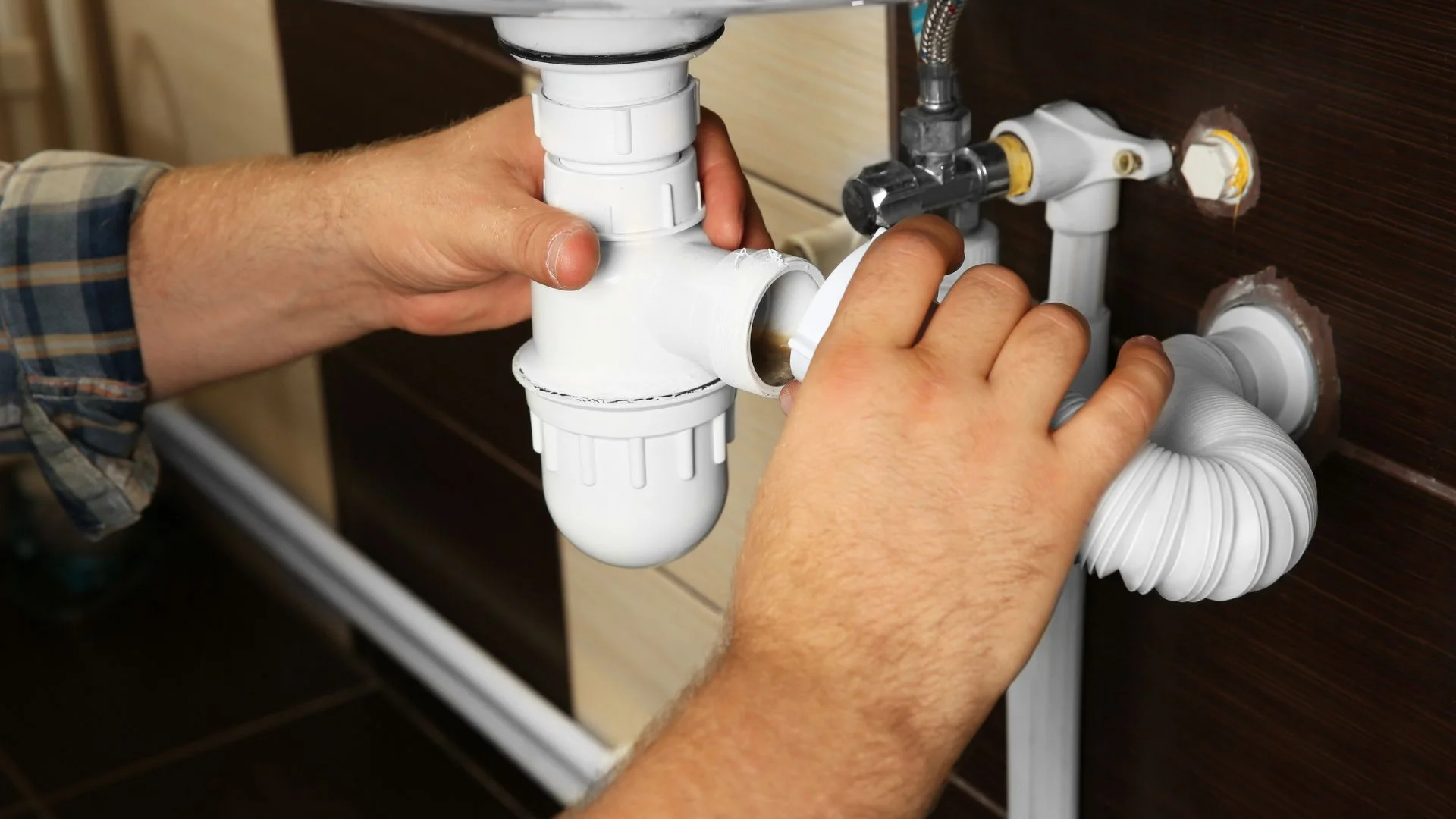
Sink installations involve more than the fixture itself. Whether it’s a kitchen undermount, a bathroom vanity sink, or a utility sink in the laundry room, the drain connections, P-trap, and supply lines all need to work together properly.
Kitchen sink replacements often come up during countertop upgrades. If you’re switching from a top-mount to an undermount sink, the plumbing underneath usually needs to be reconfigured. The drain height changes, and the garbage disposal connection (if you have one) may need to be repositioned. We handle that reconfiguration so your contractor doesn’t have to call a plumber separately.
Bathroom sinks range from pedestal styles in historic Charleston homes to modern vessel sinks and vanity-mounted basins. Each type has different mounting and drainage requirements. Pedestal sinks in particular can be tricky because the plumbing has to be positioned precisely. There’s no vanity cabinet to hide imperfect connections.
Utility sinks in laundry rooms and garages are straightforward but often overlooked. If you’re adding one where no sink existed before, we’ll run the supply and drain lines and make sure the installation meets code.
Shower and Bathtub Fixtures
Shower fixture work ranges from a simple showerhead swap (something most homeowners can handle themselves) to valve replacements and full shower reconfigurations that require opening the wall.
If your shower temperature swings wildly when someone flushes a toilet or runs a faucet elsewhere in the house, the shower valve is likely the issue. Older homes often have pressure-balance valves that have worn out, or they may lack one entirely. Replacing the valve usually means accessing the plumbing behind the wall, which is a job for a licensed plumber.
For tub faucet replacements, the main consideration is whether you’re replacing with a matching configuration or switching styles (for example, going from a two-handle to a single-handle setup). Changing configurations typically requires modifying the valve behind the wall.
One Charleston-specific note: if your home has an outdoor shower, common on James Island, Sullivan’s Island, Isle of Palms, and Folly Beach, the fixtures corrode significantly faster due to direct salt air exposure. We recommend marine-grade or stainless steel hardware for outdoor showers near the coast, and we can help you select fixtures that hold up.
What Homeowners Should Know Before Any Installation
A few things apply whether you’re installing a toilet, faucet, or sink:
Check your shut-off valves first. If the valves under your sink or behind your toilet are old gate valves that haven’t been turned in years, there’s a good chance they won’t close fully when needed. We replace these with quarter-turn ball valves during installations. They’re more reliable and much easier to operate in an emergency.
Keep your receipt and warranty information. Most quality fixtures carry manufacturer warranties ranging from limited lifetime (Moen, Delta, Kohler) to 5 to 10 years on finish and function. We install the fixture, but warranty claims go through the manufacturer, so keep your proof of purchase.
Don’t overtighten anything on porcelain. Toilets and ceramic sinks crack when bolts or connections are overtightened. This is one of the most common DIY installation mistakes we see, and it turns a $300 toilet into a broken fixture and a second purchase. We torque everything to spec.
Get Free Consultations
Other Services
Customer Support
+1 843-739-7438
info@pineappleplumbingchs.com
Office Hours
07:30 AM – 08:30 PM
09:00 AM – 04:00 PM
Common Questions
Common Questions Charleston Homeowners Ask Us
How much does it cost to have a toilet installed in Charleston?
Can I install a faucet myself or should I hire a plumber?
How do I know what size faucet or toilet fits my bathroom?
Do you install fixtures I've already purchased?
How long does a typical fixture installation take?
Should I replace fixtures during a bathroom remodel or one at a time?
Should I replace the shut-off valves when installing a new toilet or faucet?
What should I do to prepare before my fixture installation appointment?
Book an Appointment
Ready to Upgrade Your Fixtures?
Whether you’ve already picked out the perfect faucet or you need help figuring out what fits, we’ll handle the installation and make sure everything underneath is solid. Call Pineapple Plumbing or contact us online for honest advice, clear pricing, and work we stand behind.
Testimonial
Customer Experiences That Inspire Confidence
EXCELLENT Based on 38 reviews
 Posted on Google
 Jason Goldfine-MiddletonPineapple Plumbing rocks! Austin was extremely thorough and careful in his work. Originally he came by to inspect a potential leak from an upstairs bathroom above the garage. He quickly was able to confirm there was no leak after all, which was a relief. He was quite informative and looked at a number of other plumbing-related concerns we had. He helped us install an ionizer for our outdoor tankless water heater and snaked our master shower. There were a number of other things he took care of for us complimentary as well. Every question we had he took time to answer and explain in depth. We never felt he was rushing us or pushing us towards buying anything. Everything was on the table. The way he does business is highly respectable and there's no doubt we will turn to Pineapple Plumbing in the future for any plumbing needs. Aside from all that, Austin is quite personable and fun to talk to. Many thanks, Pineapple Plumbing! Till next time. :)Posted on Google
 David SiemersWork is in progress, awaiting special order parts, but arrival was prior time expected and Austin was a pleasure to deal with. Very professional and knowledgeable young man.Posted on Google
 kathy HuttoGreat service, very professional and fixed my problem. Austin double checked to insure everything was working correctly. Love the shoe covers! Will use again.Posted on Google
 Kaeshan DealThese guys were great. Very easy to work with and he finished the job quickly and was very thorough. Even cleaned up after himself. Appreciate these guys very much!Posted on Google
 Triciamorgan2222!!!!I love the cherry van. The men were very friendly and worked hard. They were easy to be around and they seemed to like their work.Posted on Google
 Steven BellAll repairs necessary to complete the job was explained in great detail. The pricing and time to complete the project is very reasonable.Posted on Google
 Alex BrooksHad Austin H. come out to the house and he did a phenomenal job. He was knowledgeable, informative and thorough. He explained to me what was going on and what he did to fix the problem. Afterwards he checked to make sure the problem didn’t persist and it did not! I would recommend them to anyone and will absolutely be calling them again if the need arises.Posted on Google
 Rose HoweWe needed a service call done at the last minute and Pineapple Plumbing were able to work us in very quickly and they assessed the situation and remedied immediately. We are very pleased with their work and great customer service. Highly recommend them for your plumbing needs.Posted on Google
 Scott GillieAustin was great and very informative throughout his evaluation of what's needed for our repair.Posted on Google
 Nicole NevinsAustin is extremely knowledgeable and very pleasant to work with. The company has a great communication tool which makes it easuer to business with themZ
