Water Heater Repair
- Home
- Water Heater Repair
Water Heater Repair & Replacement in Charleston, SC
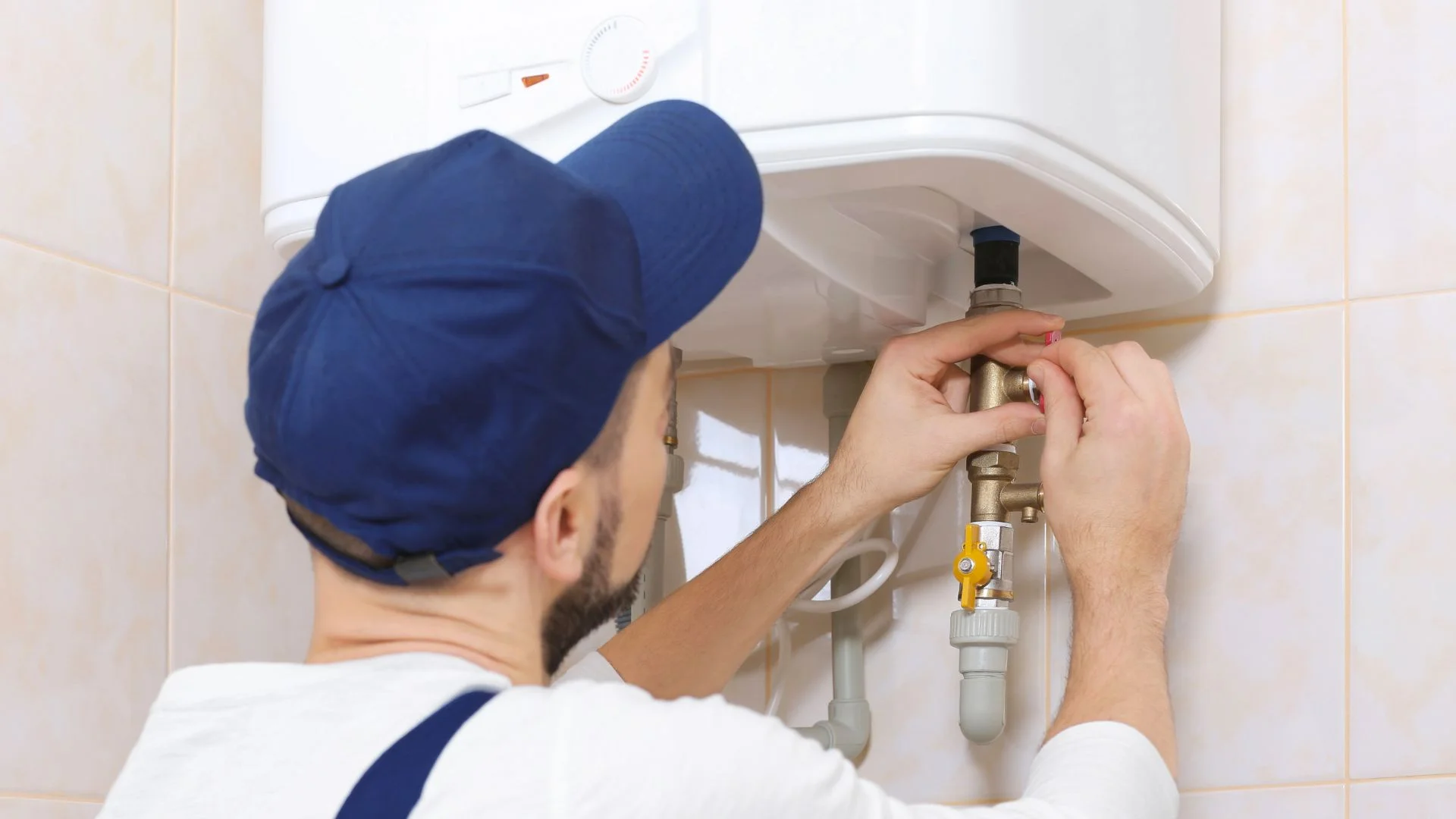
You don’t think much about your water heater until the shower goes cold or you notice a puddle spreading across the garage floor. By the time something feels wrong, the unit has usually been struggling for weeks or months, burning more energy, heating less efficiently, and heading toward a failure you didn’t see coming.
At Pineapple Plumbing, we repair and replace water heaters for homeowners across Charleston, Summerville, Mount Pleasant, West Ashley, North Charleston, James Island, Johns Island, Goose Creek, and the surrounding Lowcountry. Co-owners Austin Holcomb and Austin Webb have spent a combined 14 years diagnosing water heater problems in Charleston-area homes, and they’ll tell you the same thing every time: the fix is almost always simpler and less expensive when you call early rather than waiting for a complete breakdown.
Signs Your Water Heater Is Telling You Something
Some symptoms are obvious. Others are easy to dismiss. Here’s what to pay attention to and what each one usually means.
No hot water at all. On an electric unit, this is most commonly a failed heating element or a tripped breaker. On a gas unit, it’s usually a pilot light issue, a faulty thermocouple, or a gas valve problem. Either way, it’s typically repairable if the tank itself is still sound.
Hot water runs out faster than it used to. Sediment builds up at the bottom of the tank over time, reducing the volume of usable hot water and insulating the water from the heating element or burner. This is especially common in homes that have never had their water heater flushed. In Charleston, our moderately soft water (around 3.5 grains per gallon) produces less sediment than hard-water areas, but it still accumulates, particularly in units that have been in service for five or more years without maintenance.
Rumbling, popping, or cracking sounds. That’s sediment hardening on the tank bottom and getting disturbed when the burner fires or elements heat. It means the unit is working harder than it should. A professional flush can often resolve this if the tank hasn’t been damaged.
Rust-colored hot water. If the discoloration appears only on the hot side, the tank’s interior lining or anode rod has likely deteriorated. The anode rod is a sacrificial metal rod designed to corrode instead of your tank. Once it’s consumed, the tank itself starts rusting. Replacing the anode rod can extend tank life by several years if caught in time. If rust has already reached the tank walls, replacement is the safer path.
Leaking from the base of the tank. A puddle under the water heater can mean two things: condensation (common and harmless during humid Charleston summers when cold water enters a warm tank) or actual tank failure. We check both. If the tank itself has cracked or corroded through, it cannot be repaired. That’s a replacement. If the leak is coming from a fitting, a valve, or the drain spigot, it’s almost always fixable.
Water temperature fluctuates unpredictably. This typically points to a failing thermostat, a partially clogged burner, or, on tankless units, scale buildup in the heat exchanger restricting flow. Tankless systems are sensitive to flow rate and inlet water temperature, and even minor scale accumulation can cause temperature swings.
When Repair Makes Sense and When It Doesn't
We’ll always give you an honest recommendation, and here’s the framework we use internally to make that call:
Repair is the right move when the unit is under eight years old, the tank isn’t leaking, and the problem is isolated to a replaceable component such as a heating element, thermostat, thermocouple, anode rod, or pressure relief valve. These are all standard repairs that extend the life of an otherwise healthy unit.
Replacement makes more sense when the tank is leaking from the body (not a fitting), the unit is over 10 years old and requiring its second or third repair, repair costs exceed 50 percent of a new installation, or you’re seeing rust-colored water that indicates internal corrosion has progressed past the anode rod.
One thing we never do: pressure you into replacing a water heater that has years of life left. If a $25 thermocouple or a $150 element swap solves the problem, that’s what we’ll recommend. You’ll see what we see, understand the options, and make the decision yourself.
Tank vs. Tankless: What Actually Makes Sense for Charleston Homes
This is one of the most common questions we get, and the honest answer is that both are good options, the right choice depends on your household, your space, and your budget.
Tank water heaters (40–50 gallon is standard for most Charleston homes) store heated water so it’s available on demand. They cost less to purchase and install, work reliably for 8–12 years with proper maintenance, and don’t require electrical upgrades or gas line modifications. For most families, a tank unit is the practical, cost-effective choice.
Tankless water heaters heat water only when you turn on a faucet, so they never run out. They last 15–20 years, take up far less space, and reduce energy costs by 24–34 percent according to the U.S. Department of Energy. They cost more upfront and may require a gas line upgrade or a dedicated electrical circuit depending on your home’s current setup.
Charleston-specific consideration: our warm groundwater temperature (typically 65–75°F depending on season) means tankless units here don’t have to work as hard as they would in northern climates where incoming water can be 40°F. That translates to better performance and longer equipment life for tankless systems in the Lowcountry compared to national averages.
If you’re replacing an existing tank unit and your home doesn’t need gas line or electrical work, the swap is usually straightforward – same-day in most cases. Switching from tank to tankless requires more planning, and we’ll walk you through the full scope before you commit.
What to Do When Your Water Heater Fails
If your water heater is leaking significantly or you smell gas:
Gas unit: turn off the gas supply valve on the line feeding the heater. If you smell gas strongly, leave the house and call your gas utility or 911 before calling a plumber.
Electric unit: switch off the breaker that serves the water heater before touching anything near standing water.
Both types: close the cold-water supply valve on top of the heater to stop water from flowing into the tank. If you can’t reach the valve or it’s seized, shut off the main water supply to the house.
Then call us. We handle water heater emergencies and can typically respond the same day for active leaks or complete failures.
Get a Free Estimate
Other Services
Customer Support
+1 843-739-7438
info@pineappleplumbingchs.com
Office Hours
07:30 AM – 08:30 PM
09:00 AM – 04:00 PM
Common Questions
Common Questions Charleston Homeowners Ask Us
How much does water heater replacement cost in Charleston?
How long does a water heater last in the Charleston area?
Should I flush my water heater, and how often?
Can I replace a gas water heater with an electric one, or vice versa?
What is an expansion tank and do I need one?
Is it worth repairing a water heater that's over 10 years old?
Can regular plumbing maintenance help lower my water bill?
Is plumbing maintenance worth it if my home doesn't have any plumbing problems?
Book an Appointment
Schedule Your Repair Today
Your plumbing doesn’t need attention every week, but it does need attention. One visit a year from someone who knows what to look for can save you from the kind of surprise that turns a regular Tuesday into an expensive emergency.
Call Pineapple Plumbing or contact us online to schedule a plumbing inspection or maintenance visit. We’ll walk through your system, tell you what we find, and help you plan ahead – no pressure, no unnecessary work.
Testimonial
Customer Experiences That Inspire Confidence
EXCELLENT Based on 38 reviews
 Posted on Google
 Jason Goldfine-MiddletonPineapple Plumbing rocks! Austin was extremely thorough and careful in his work. Originally he came by to inspect a potential leak from an upstairs bathroom above the garage. He quickly was able to confirm there was no leak after all, which was a relief. He was quite informative and looked at a number of other plumbing-related concerns we had. He helped us install an ionizer for our outdoor tankless water heater and snaked our master shower. There were a number of other things he took care of for us complimentary as well. Every question we had he took time to answer and explain in depth. We never felt he was rushing us or pushing us towards buying anything. Everything was on the table. The way he does business is highly respectable and there's no doubt we will turn to Pineapple Plumbing in the future for any plumbing needs. Aside from all that, Austin is quite personable and fun to talk to. Many thanks, Pineapple Plumbing! Till next time. :)Posted on Google
 David SiemersWork is in progress, awaiting special order parts, but arrival was prior time expected and Austin was a pleasure to deal with. Very professional and knowledgeable young man.Posted on Google
 kathy HuttoGreat service, very professional and fixed my problem. Austin double checked to insure everything was working correctly. Love the shoe covers! Will use again.Posted on Google
 Kaeshan DealThese guys were great. Very easy to work with and he finished the job quickly and was very thorough. Even cleaned up after himself. Appreciate these guys very much!Posted on Google
 Triciamorgan2222!!!!I love the cherry van. The men were very friendly and worked hard. They were easy to be around and they seemed to like their work.Posted on Google
 Steven BellAll repairs necessary to complete the job was explained in great detail. The pricing and time to complete the project is very reasonable.Posted on Google
 Alex BrooksHad Austin H. come out to the house and he did a phenomenal job. He was knowledgeable, informative and thorough. He explained to me what was going on and what he did to fix the problem. Afterwards he checked to make sure the problem didn’t persist and it did not! I would recommend them to anyone and will absolutely be calling them again if the need arises.Posted on Google
 Rose HoweWe needed a service call done at the last minute and Pineapple Plumbing were able to work us in very quickly and they assessed the situation and remedied immediately. We are very pleased with their work and great customer service. Highly recommend them for your plumbing needs.Posted on Google
 Scott GillieAustin was great and very informative throughout his evaluation of what's needed for our repair.Posted on Google
 Nicole NevinsAustin is extremely knowledgeable and very pleasant to work with. The company has a great communication tool which makes it easuer to business with themZ
